If you are currently sidelined by pain, the first question on your mind is likely: how soon can you get back to your workouts? Whether you are a dedicated marathoner or a regular at the local CrossFit box, being told to “just rest” is frustrating. At The Movement Schopp in Torrance, the goal is not simply to eliminate pain — it is to return you to peak performance.
The timeline for physical therapy recovery is highly individualized. Your body, your injury, and your goals are unique, which means there is no universal answer. While some athletes see meaningful relief within a few sessions, others benefit from a more structured program spanning several months. Understanding that recovery is a process of rebuilding — not a quick fix for symptoms — is the foundation of lasting results.
Understanding the Phases of Physical Therapy Recovery
Recovery typically moves through a series of distinct phases. The first priority is pain management and reducing inflammation. Once the initial acute phase subsides, the focus shifts to restoring range of motion and mobility. From there, the program advances toward building the strength and endurance needed to support healthy movement.
The final and most critical phase is functional training and return to sport. This is where rehabilitation ensures your body can handle the specific demands of your lifestyle — whether that means hitting a clean deadlift, finishing a 10K, or driving through a full golf swing. Progress is rarely a straight line. Occasional flare-ups are a normal part of the physiological healing process, and consistency with your plan is what drives long-term success.
Factors That Influence Your Recovery Timeline
Several variables determine how quickly you will see results from sports physical therapy.
- Type and severity of the injury: A mild ankle sprain generally resolves much faster than a chronic case of Achilles tendinopathy or post-surgical rehabilitation.
- Individual health factors: Sleep quality, nutrition, and overall tissue health all play a significant role in how efficiently your body repairs itself.
- Accuracy of the initial assessment: Identifying the true root cause of an injury — rather than simply treating where it hurts — leads to more targeted and efficient care.
- Consistency and adherence: Following through on your prescribed program between sessions directly impacts how quickly you progress through each phase.
At The Movement Schopp, comprehensive biomechanical assessments and functional movement screens are used to look beyond the site of pain and evaluate how you move as a whole. A hip mobility limitation, for example, may be the underlying driver of knee pain. Addressing the source — not just the symptom — is what makes recovery more efficient.
Recovery Expectations for Specific Sports Injuries
The demands of your sport shape the rehabilitation work your body needs to do. Below is a general overview of what to expect for some of the most common presentations treated at The Movement Schopp.
CrossFit and Strength Training Injuries
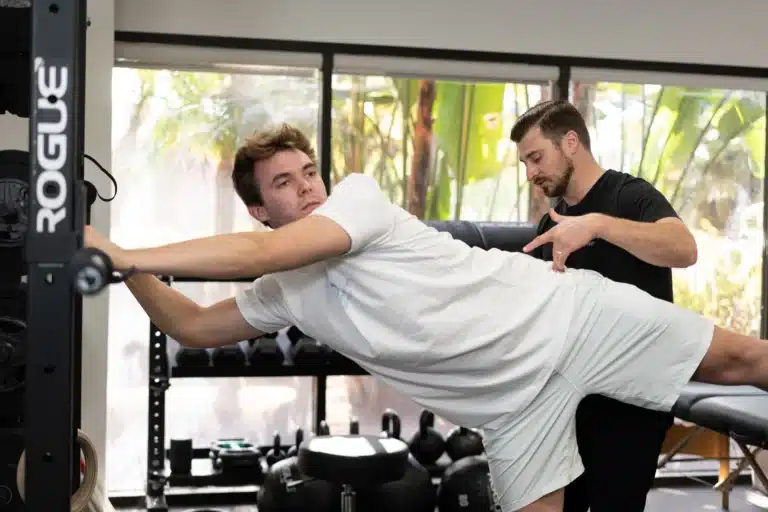
CrossFit athletes frequently present with conditions such as rotator cuff impingement, shoulder pain, and low back pain. Because these sports involve high-intensity effort and heavy loading, rehabilitation focuses on optimizing lifting mechanics, restoring shoulder mobility, and building trunk stability.
Depending on severity, athletes often see significant improvement within 6 to 12 weeks as loading is gradually reintroduced alongside therapeutic exercise and manual therapy. Tools such as Blood Flow Restriction (BFR) training can be particularly valuable for maintaining strength during the early phases of recovery when heavy loading is not yet appropriate.
Running Injuries
Running injuries such as runner’s knee (patellofemoral pain), IT band syndrome, shin splints, and plantar fasciitis are frequently the result of repetitive impact and training load errors. At The Movement Schopp, care for runners includes a detailed running gait analysis and running form assessment to identify mechanical contributors to injury.
Mild cases may resolve within 4 to 8 weeks. Chronic tendon issues — such as Achilles tendinopathy — may require 3 to 6 months of consistent, progressive load management to fully remodel the tissue and support a durable return to running.
Golf-Related Injuries
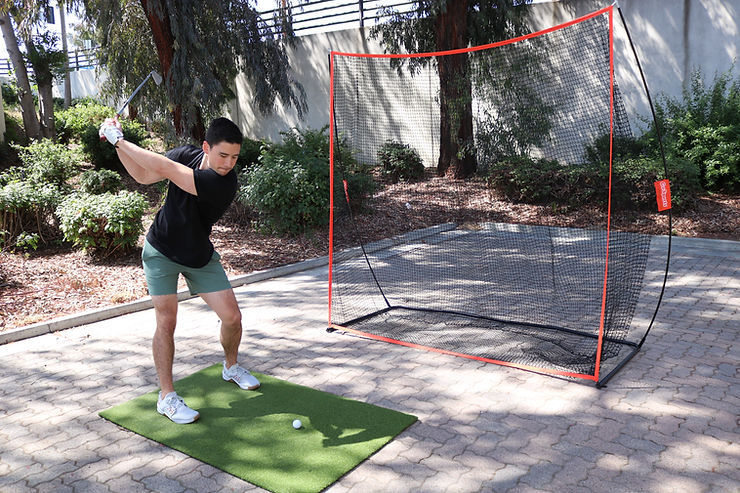
Golf demands exceptional rotational mobility, hip stability, and core control. Common presentations include golfer’s elbow, mid back pain, and hip impingement. At The Movement Schopp, Titleist Performance Institute (TPI) testing is used to identify the physical limitations affecting your swing mechanics.
Recovery for golf-related injuries typically ranges from 8 to 16 weeks, with the program focused on restoring mobility, correcting movement inefficiencies, and rebuilding the rotational power needed to return to the course without compensation patterns.
Why The Movement Schopp Takes a Different Approach
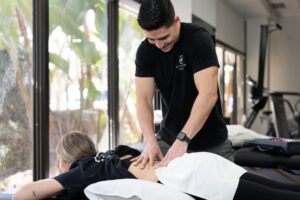
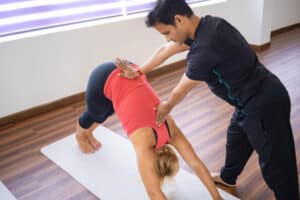
At The Movement Schopp, every session is a dedicated, one-on-one appointment with a Doctor of Physical Therapy. You will not be handed off to an aide or left to complete exercises independently while your therapist manages multiple patients simultaneously.
The clinicians at The Movement Schopp are also trained in strength and conditioning, which means they understand that rest is rarely the right answer for an active individual. The approach is built around keeping you moving during recovery — modifying your training where necessary so you can maintain your fitness while the underlying problem is addressed.
Assessment tools such as force plate testing, VALD testing, and isokinetic dynamometer testing provide objective data to track your progress and guide clinical decision-making throughout your program.
A Systematic Approach: Find, Fix, and Perform
The Movement Schopp follows a structured methodology designed to ensure you do not just recover — you come back stronger.
Find
Every program begins with a thorough evaluation and biomechanical analysis to identify exactly why the injury occurred. Understanding the root cause is what separates a targeted recovery plan from a generic one.
Fix
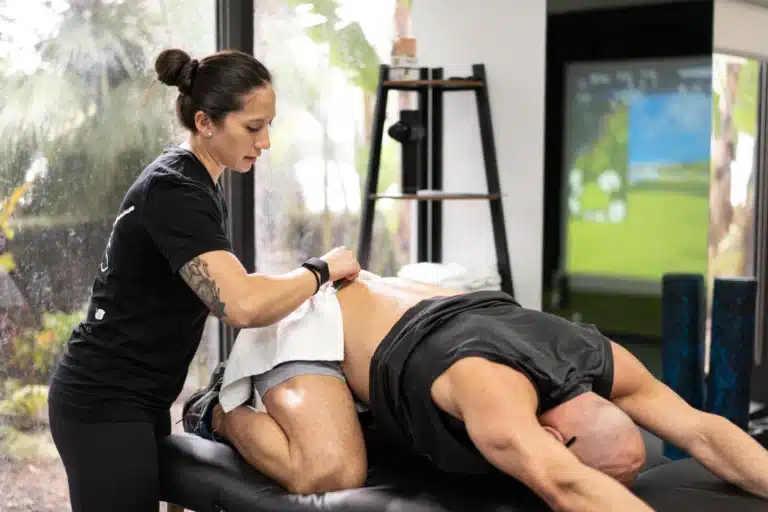
A personalized treatment plan is built using a combination of manual therapy, soft tissue mobilization, joint mobilization, cupping, IASTM, and therapeutic exercise to eliminate pain, restore function, and rebuild movement quality.
Perform
The final phase equips you with the strength progressions, movement strategies, and injury prevention tools needed to stay at peak performance long after your formal program ends. For athletes pursuing return-to-sport goals, plyometrics, return-to-sport progressions, and return-to-sport testing ensure you are cleared based on objective performance benchmarks — not just how you feel.
Start Your Recovery at The Movement Schopp
Every injury has its own timeline, but the right guidance makes a measurable difference in how efficiently you get there. At The Movement Schopp in Torrance, athletes receive the individualized attention, evidence-based treatment, and performance-focused care needed to navigate recovery with clarity and confidence.
If you are ready to stop guessing and start moving forward, schedule your comprehensive assessment at The Movement Schopp today.