You landed a box jump, stepped off a curb mid-run, or pivoted through a swing — and your ankle rolled again. You rested, it calmed down, and then it happened a third time. That cycle is frustrating, and it is not a sign that you are clumsy.
At The Movement Schopp, we see everyday athletes in the South Bay deal with this pattern regularly. The good news is that repeat rolls usually have a fixable cause, and it goes well beyond the ligament itself.
Why Does Your Ankle Keep Rolling After a Sprain?
Rest helps an irritated ankle calm down. It does not retrain the system that keeps your ankle steady. Many people experience lingering symptoms, a feeling of giving way, or repeat sprains long after the initial injury.
A sprain stretches or tears ligaments, but it also disrupts the sensory feedback coming from the joint. Your muscles can end up slower to respond when the ground shifts or your foot lands off balance. That is why your ankle can feel fine during a walk and then fail you during a sprint, a lunge, or a golf swing.
What Is Proprioception and Why Does It Matter for Your Sport?
Proprioception is your body’s built-in position sense. It tells your brain where your foot and ankle are without you looking, and it helps your muscles react in a split second.
When that signal gets disrupted after a sprain, your ankle is less prepared for the demands of your training. Here is what that looks like across different activities:
- CrossFit: landings, cutting movements, and loaded exercises on a fatigued foot
- Running: uneven pavement, trail surfaces, and mechanical breakdown late in a run
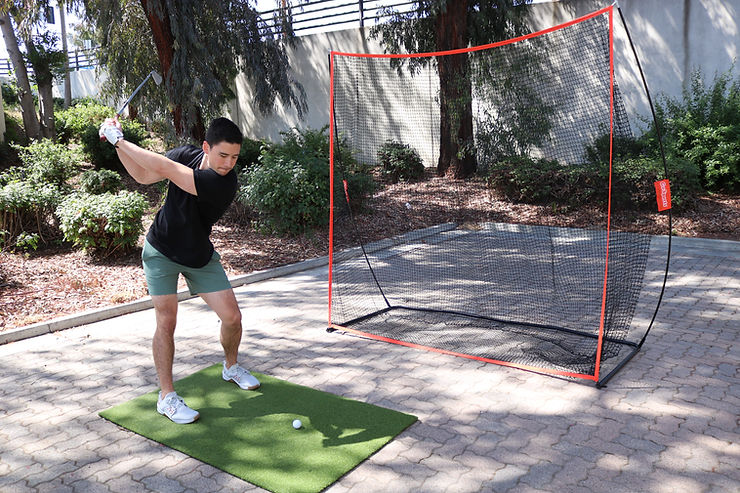
- Golf: weight shifts and rotation on sloped or uneven lies
- Performance training: quick changes of direction and single-leg loading
How Does Balance and Proprioception Training Work?
This is more than standing on one leg. Balance and proprioception training challenges your ankle through a planned progression so your brain and muscles learn to work together again. Research supports balance training as an effective strategy for reducing the risk of repeat ankle sprains.
Start With Control
Training begins with controlled single-leg balance and ankle stability work. From there, challenges are layered in — unstable surfaces, head turns, and reduced visual input — to progressively stress the system in a safe, structured way.
Build Strength and Reaction
Through neuromuscular re-education and therapeutic exercise, the muscles surrounding your ankle, foot, and hip are strengthened. These are the muscles that fire when your ankle begins to tip, and training them to react faster is central to preventing the next roll.
Load It Like Your Sport
Next come plyometrics and return-to-sport progressions. Hops, landings, and multi-directional drills are matched to what you actually do — whether that is a WOD, a long run, or 18 holes. Hands-on care including manual therapy and joint mobilization supports ankle mobility throughout the process.
How Do You Know When You Are Ready to Return?
“No pain” is not the same as “ready.” At The Movement Schopp, objective testing removes the guesswork from your return to training.
- Functional movement assessment to identify compensations that continue to stress the ankle
- Isokinetic dynamometer testing to measure strength and compare side-to-side deficits
- Running gait analysis to evaluate how your mechanics load the ankle under real conditions
- Return-to-sport testing using performance benchmarks, not symptom relief alone
This is how you return to training with confidence rather than crossed fingers.
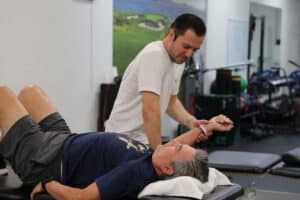
What Happens at Your First Visit at The Movement Schopp?
Every provider at The Movement Schopp is a Doctor of Physical Therapy, so you work one-on-one with the same expert from evaluation through discharge. Your first visit is a 60 to 75 minute session focused on how you move, not just where it hurts. Direct access means no physician referral is needed to book.
The approach at The Movement Schopp follows a clear three-step framework:
- Find the Real Cause: A thorough look at your ankle, hips, foot mechanics, and movement habits to identify what is driving the problem.
- Fix Problem Areas: A targeted plan built around balance training, strength work, and sport-specific drills tailored to your goals.
- Stay at Peak Performance: Strategies to maintain your gains so repeat sprains stay in the past.
The goal is to keep you training where possible while you recover — not bench you for weeks on end.
Ready to Stop Rolling Your Ankle?
Repeat ankle sprains are not something you have to accept as part of your sport. If you are looking for sports physical therapy in Torrance, CA that addresses the root cause — not just the symptoms — The Movement Schopp is ready to help you build an ankle you can trust.
Learn more about our services or why athletes choose us.